Sunday, January 22, 2012

Labor


Tomorrow, back to the grind of work that means nothing, that adds nothing, that keeps me busy while reducing me to a factory worker without personality or mind, and desperately unhappy.  I fault my bosses for making it thus, when before I was at least content, making my own rules, respecting the work as worthy of me, and I of it.

Personally, I have nothing against work, particularly when performed, quietly and unobtrusively, by someone else.  —Barbara Ehrenreich, "Goodbye to the Work Ethic" (1988), in The Worst Years of Our Lives: Irreverent Notes from a Decade of Greed (1991)
Vitam perdidi laboricose agendo. 
I have spent my life laboriously doing nothing.
—quoted by Grotius on his death bed
“On your deathbed you’re not going to say ‘I wish I’d spent more time at the office.’”
—my doctor


image:  Sisyphus, Titian 


Pinewood and Olallieberry Jam


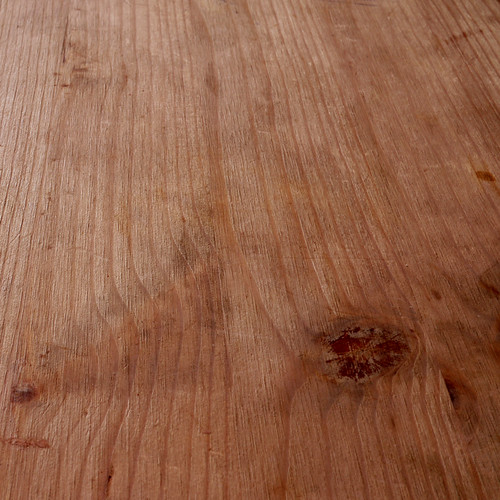
Going out into the rain to print out a draft of my poem for class (having put off too long getting toner for my Canon at home), I stop by the farmers’ market to buy Olallieberry jam.  Having a stream of consciousness morning I come across the fragrance of a man planing pinewood on the open tailgate of his van, the Turkish restaurant grilling lamb basted with lemon and oregano for lunch, the little shop that offers Qigong lessons closed, a bag of old Morse mysteries, aged rum and brilliant oranges for sangria for our writers’ gathering later today.  All these are given added texture by the rain, the general grayness.


image:  Pine Grain #2, Brett Jordan 

Saturday, January 21, 2012

Thought for the Day


Thought for the day:

What do the Fencing Pros on El Camino offer?

To teach you parries, feints with silver blades,
duelling at dawn at the secluded edge of a birch forest?

Or only chain link, barbed wire, split rail?

I wonder every time I pass.


image:  Christie B. Cochrell, Point Reyes Fence


Friday, January 20, 2012

Collective Nouns


My favorite collective nouns of the week:

a charm of hummingbirds
a smack of jellyfish
a parliament of owls


image:  Christie B. Cochrell, Jellyfish

Thursday, January 19, 2012

'tis the Cezanne


Happy birthday, Paul Cezanne.

You once said “Here, on the river's verge, I could be busy for months without changing my place, simply leaning a little more to right or left.”  How well that fits my own outlook on life and rivers and keeping busy with artistic creation.

And I love your greens and oranges in this still-life with fruit. 


image:  Paul Cezanne, Un coin de table, Barnes Foundation

Wednesday, January 18, 2012

Literal Latté


I’m pleased that two of my short-short stories, Swallows and Moss, have been posted on the Literal Latté site.

Please visit, and submit comments.

It’s fun to be pioneering a revolutionary new genre (or one daringly retro)—the happy ending.


images:  Unknown Minoan Fresco 
             Swallows, Akrotiri

Tuesday, January 17, 2012

Steinbeck


I've always loved John Steinbeck's Cannery Row for its vivid descriptions of a unique place.  It begins, famously,
"Cannery Row in Monterey in California is a poem, a stink, a grating noise, a quality of light, a tone, a habit, a nostalgia, a dream. Cannery Row is the gathered and scattered, tin and iron and rust and splintered wood, chipped pavement and weedy lots and junk heaps, sardine canneries of corrugated iron . . ."
It's been sad to watch Cannery Row lose its character over the years, in return visits (though Doc's laboratory is still there, untouched), but this area does feel very much still like the "stuff" of Steinbeck.  And I learn from the Asilomar State Park Guide:
     John Steinbeck’s oldest sister, Esther Steinbeck Rogers, and her husband, Carrol Rodgers, did own a small cottage at 825 Asilomar Avenue that is now part of the Asilomar conference grounds.  The cottage was purchased by California State Parks in 1972.
     Esther and Carrol Rodgers owned an apple farm in Watsonville, CA, and bought the small house on Asilomar Avenue in 1932 for “their seaside cabin.”
     John Steinbeck and Gwendolyn Conger stayed in the cabin in 1941.  In 1946, Steinbeck wrote to a friend stating he was writing the Log from the Sea of Cortez when he and Gwen “were hiding in the pine woods” in his sister’s cabin.  Steinbeck wrote, “She would sleep late and I would get up and build a big fire and work until noon when she woke up.  That would be the end of work for the day and we would go walking in the sand dunes and eat thousands of doughnuts and drink coffee.  I worked very hard.”  The Log from the Sea of Cortez was published in the spring of 1951.


image:  Steinbeck Country 

Monday, January 16, 2012

Waves


There's something endlessly restorative about the waves, wherever in the world they are.

Here's an ode to the sea, to celebrate—


Stroke by
stroke my
body remembers that life and cries for
the lost parts of itself—
fins, gills
opening like flowers into
the flesh—my legs
want to lock and become
one muscle, I swear I know
just what the blue-gray scales
shingling
the rest of me would
Feel like!
paradise!  Sprawle
in that motherlap,
in that dreamhouse
of salt and exercies,
what a spillage
of nostalgia pleads
from the very bones! How
they long to give up the long trek
inland, the brittle
beauty of understanding,
and dive,
and simply
become gain a flaming body
of blind feeling
sleeking along
in the luminous roughage of the sea’s body,
vanished
like victory inside that
Insucking genesis, that
roaring flamboyance, that
perfect
beginning and
conclusion of our own.

—Mary Oliver


image:  Breaking Wave, Asilomar State Beach, Tewy

Sunday, January 15, 2012

Places I Would Rather Be


Asilomar.

And so I shall be!  Stealing an extra day to add to the long weekend . . .  Sitting by the fireplace with a good book after a bracing walk down to the beach and back, an early dinner of fresh fish.

The historic wooden buildings remind me of Lake Lodge in Yellowstone, where my father taught me to play ping-pong one long-ago rainy August afternoon.  Snug and deeply comforting somehow.


image:  Asilomar State Beach, Jon Sullivan

Saturday, January 14, 2012

Thought for the Day


Waterlilies.


What loved little islands, twice seen in their lakes,
Can the wild water-lily restore.
—Thomas Campbell, Field Flowers


image:  Christie B. Cochrell, Waterlily Abstract